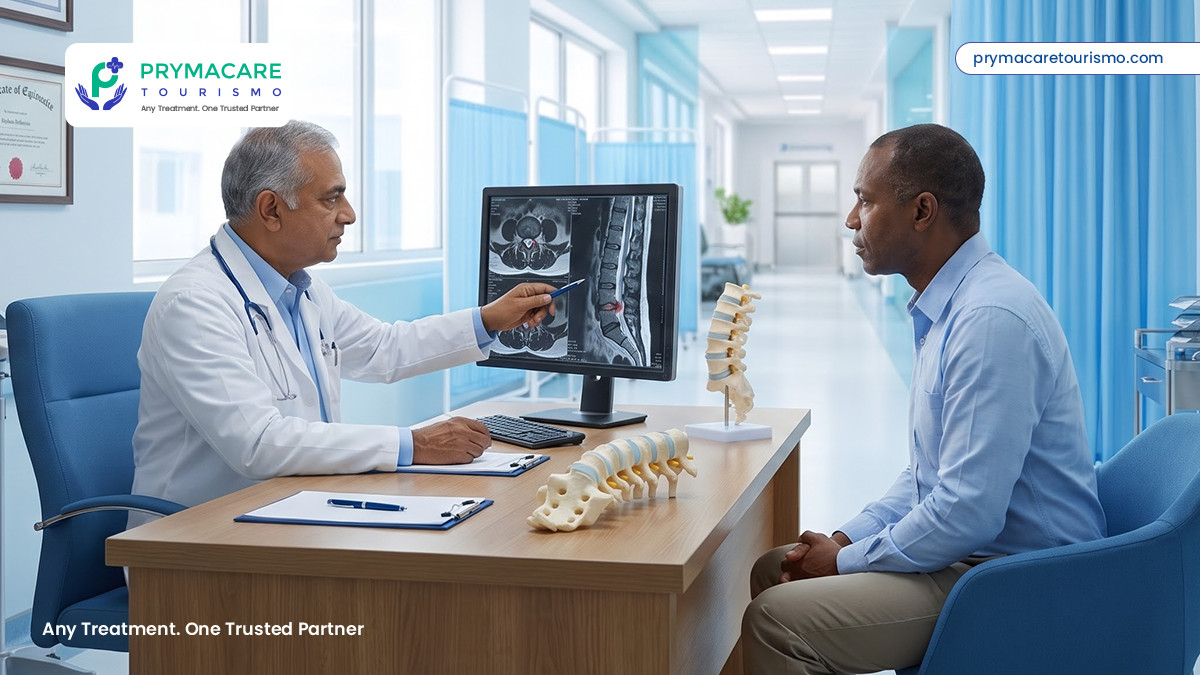
Spine problems can range from a slipped disc and nerve compression to spinal deformities that affect movement and quality of life. When medicines, physiotherapy, injections, or other non-surgical treatments do not provide enough relief, a specialist may recommend surgery. For patients considering spine surgery in India, understanding the procedure, hospital options, expected costs, visa requirements, and recovery timeline can make the planning process easier. This guide explains the main types of spine surgery, minimally invasive options, factors that affect treatment costs, and what international patients can expect before and after surgery.
Why International Patients Choose Spine Surgery in India
India has become a destination for patients seeking specialist surgical care, including spine treatment in India for foreigners. Patients can access hospitals with specialist departments, multidisciplinary teams, modern operating facilities, and international patient services. For international patients, hospital accreditation is another factor to consider. JCI- and NABH-accredited hospitals follow established standards for patient care, safety, and clinical processes. English-speaking medical and support teams can also make communication easier. Patients can explore treatment options based on their medical needs, preferred timelines, and the availability of specialists. Treatment costs can be up to 80% less than Western healthcare costs, although the actual amount depends on the individual treatment plan.
Types of Spine Surgery Available in India
The right spinal procedure depends on the location and cause of the problem, symptoms, imaging results, previous treatment, and overall health. A spine specialist should assess your reports before recommending surgery.
Discectomy or Microdiscectomy
A discectomy removes part of a damaged or herniated disc that is pressing on a spinal nerve. Microdiscectomy uses a smaller surgical approach and is commonly considered for certain cases of nerve compression, particularly when symptoms such as leg pain or weakness persist despite non-surgical treatment.
Laminectomy
Laminectomy is a decompression procedure in which part of the vertebral bone called the lamina is removed to create more space around the spinal nerves or spinal cord. It may be considered for conditions such as spinal stenosis that cause nerve compression.
Spinal Fusion
Spinal fusion surgery in India involves joining two or more vertebrae so that they heal into a stable segment. It may be recommended for certain cases of spinal instability, deformity, degenerative conditions, or other problems where stabilisation is required. Implants such as screws, rods, cages, or bone graft material may be used depending on the procedure.
Artificial Disc Replacement
Artificial disc replacement involves removing a damaged spinal disc and replacing it with an artificial disc implant. The procedure is intended to address specific disc-related conditions while preserving movement at the treated level. It is not suitable for every patient.
Scoliosis and Deformity Correction
Scoliosis surgery in India may involve techniques designed to correct spinal curvature and stabilise the spine. The surgical approach varies according to factors such as the severity and location of the curvature, age, and overall spinal condition.
Minimally Invasive, Endoscopic and Robotic-Assisted Spine Surgery
Minimally invasive spine surgery in India uses smaller incisions and specialised instruments to access the treatment area while limiting disruption to surrounding tissues where clinically appropriate. Depending on the condition, this may help reduce tissue damage and support earlier mobilisation. Endoscopic spine surgery uses an endoscope and specialised instruments through a small access point. It can be appropriate for selected spinal conditions, but it is not suitable for every patient or every type of surgery.
Robotic-assisted or navigation-guided techniques can help surgeons plan and guide certain procedures with computer-assisted imaging and instrumentation. Availability varies between hospitals and procedures. Your surgeon should determine whether a minimally invasive, endoscopic, robotic-assisted, or conventional approach is appropriate for your case.
Spine Surgery Cost for International Patients: What Affects the Bill
The cost of spine surgery for international patients is not a single fixed amount. A personalised estimate depends on the diagnosis, procedure, and hospital selected. Key factors can include the number of spinal levels being treated, type and quantity of implants required, surgical technique, hospital category and location, length of hospital stay, pre-operative investigations and consultations, intensive care or additional monitoring, and rehabilitation and follow-up requirements. When comparing estimates, check what the quoted amount includes, such as hospital stay, surgeon and anaesthesia fees, tests, implants, medicines, rehabilitation, and follow-up. Costs may vary based on treatment protocols, implant brands, room categories, and additional medical needs.
How to Choose the Right Hospital and Spine Surgeon
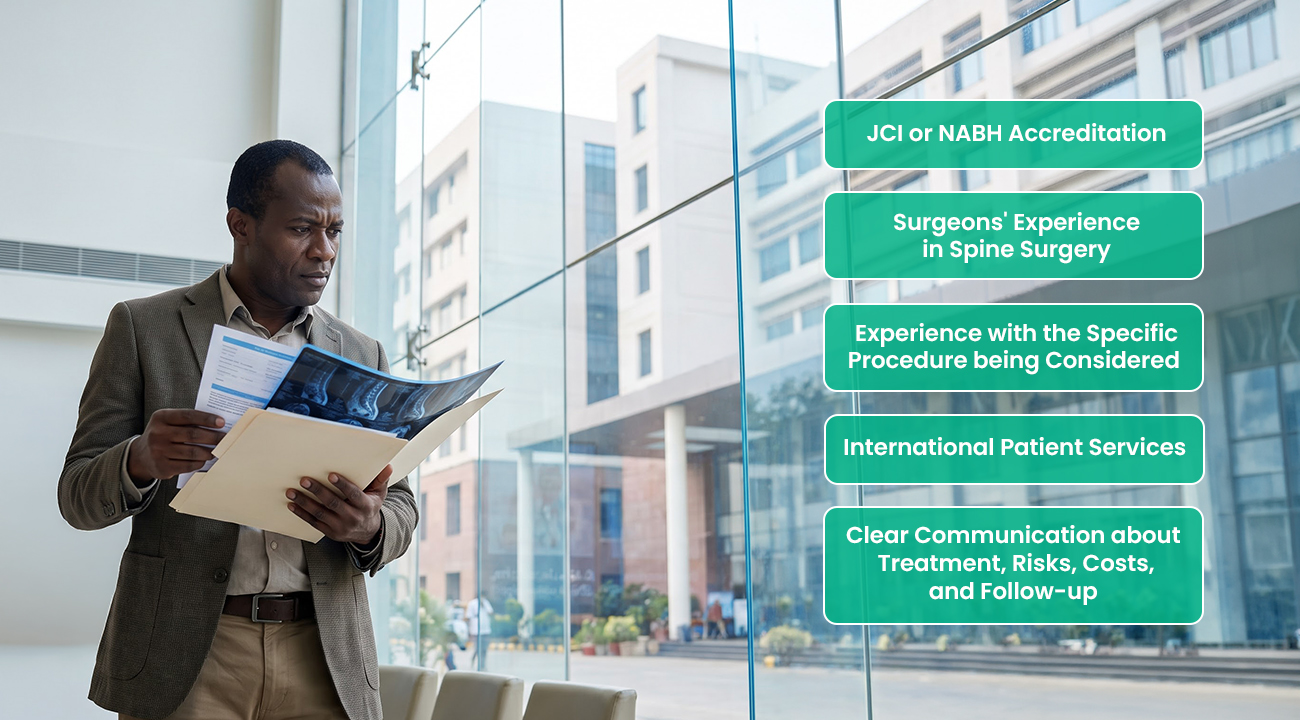
Choosing a hospital is about more than comparing prices. International patients should consider:
- JCI or NABH accreditation
- Surgeons' experience in spine surgery
- Experience with the specific procedure being considered
- International patient services
- Clear communication about treatment, risks, costs, and follow-up
It is also useful to review verified doctor profiles and compare hospitals based on the expertise relevant to your condition.
If you are considering several hospitals, request treatment plans and quotations on official hospital letterhead. Comparing multiple opinions can help you understand the recommended procedure and the differences between treatment plans.
How PrymaCare Helps You
Planning spine treatment in India from another country can involve several steps. PrymaCare Tourismo helps coordinate the process from medical evaluation to hospital treatment.
1. Share your medical reports: Send your MRI, CT scans, X-rays, prescriptions, and previous treatment records for review.
2. Find the right specialist: PrymaCare shares your reports with suitable JCI/NABH-accredited hospitals and specialists to help identify appropriate treatment options.
3. Compare treatment plans and costs: Receive treatment recommendations and quotations from hospitals, including the proposed procedure, hospital stay, implants, and expected charges.
4. Get visa and travel support: PrymaCare assists with medical visa documentation, travel planning, accommodation, airport transfers, and other arrangements.
5. Coordinate your hospital visit: From arrival to admission and treatment, PrymaCare helps coordinate communication with the hospital and supports you throughout your medical journey.
6. Receive continued support: After treatment, the team can help coordinate follow-up consultations and other non-clinical requirements.
PrymaCare provides this coordination support at zero commission to international patients, with patients paying hospitals and other service providers directly.
Recovery After Spine Surgery in India
Recovery after spine surgery depends on the procedure, your overall condition, and how your body responds to treatment. Your hospital team will monitor pain, wound healing, mobility, and neurological function, with physiotherapy introduced when appropriate. Hospital stays may range from a short stay for selected minimally invasive procedures to several days or longer for complex surgery. Before returning home, your surgeon should confirm that you are fit to fly and provide guidance on movement, medication, wound care, and travel precautions. Recovery continues after you return home, with follow-up care, physiotherapy, and activity restrictions as advised by your medical team. PrymaCare Tourismo can also help coordinate post-treatment communication with the hospital when required.
Plan Surgery with Greater Clarity
Planning treatment abroad involves more than selecting a surgical procedure. You also need to understand the specialist's recommendation, hospital facilities, estimated expenses, expected stay, and arrangements for recovery after treatment. Reviewing these details in advance can help you make informed decisions and prepare for your medical journey with fewer uncertainties. Spine surgery in India can be planned around your specific condition with specialist opinions and treatment quotations from established hospitals. PrymaCare Tourismo can assist with hospital coordination, travel arrangements, and communication throughout the process.
Talk to our medical coordinator and get personalised guidance for planning your treatment in India.