
Every year, an estimated 400,000 babies in sub-Saharan Africa are born with sickle cell disease, making the region home to nearly two-thirds of all cases worldwide. African parents spend months searching for a matching donor, worrying about managing medical expenses and finding the right treatment location. When every decision affects the child’s healthier future, choosing what care to seek becomes one of the most important steps. This is why bone marrow transplant in India has become a trusted option for families looking for advanced treatment, experienced specialists, and quality care at a more affordable cost.
What Are the Causes of Sickle Cell Disease
Sickle cell disease is an inherited blood disorder caused by a mutation in the gene responsible for producing hemoglobin. In healthy individuals, red blood cells are round and flexible, allowing them to move easily through blood vessels. In people with this disease, the abnormal hemoglobin causes red blood cells to become rigid and crescent, or "sickle" shaped, especially when oxygen levels are low. It leads to blocked blood flow, breaks down more quickly than normal red blood cells, and reduces the amount of oxygen reaching different parts of the body. The condition is passed from parents to their children through genes.
It is most common among people of African ancestry because carrying a single sickle cell gene historically provided partial protection against severe malaria. Over generations, this made the gene more common in regions where malaria was widespread, particularly across sub-Saharan Africa. In some communities, consanguineous (close-relative) marriages may further increase the likelihood that two carriers have a child with sickle cell disease.
Treatment for Sickle Cell Disease
There are several treatment methods to manage symptoms and prevent complications. The right treatment is based on the patient's age, symptoms, overall health, and the severity of the condition. For eligible patients, a bone marrow transplant (BMT), also known as a stem cell transplant, is an established curative treatment for sickle cell disease. The procedure replaces the patient's diseased blood-forming stem cells with healthy stem cells from a compatible donor, allowing the body to produce normal red blood cells over time.
Types of Bone Marrow Transplants
Bone marrow transplants are classified based on the source of the stem cells and the donor match. An autologous transplant uses the patient's own stem cells, which are collected, stored, and returned after treatment. An allogeneic transplant uses healthy stem cells from another person who is HLA-compatible with the patient. This category includes a matched sibling donor (MSD) transplant, in which the donor is an HLA-matched brother or sister, a haploidentical transplant, which uses a half-matched donor such as a parent, child, or sibling, and a matched unrelated donor (MUD) transplant, where stem cells are obtained from an unrelated donor identified through national or international donor registries.
Why African Families Choose Sickle Cell Treatment in India
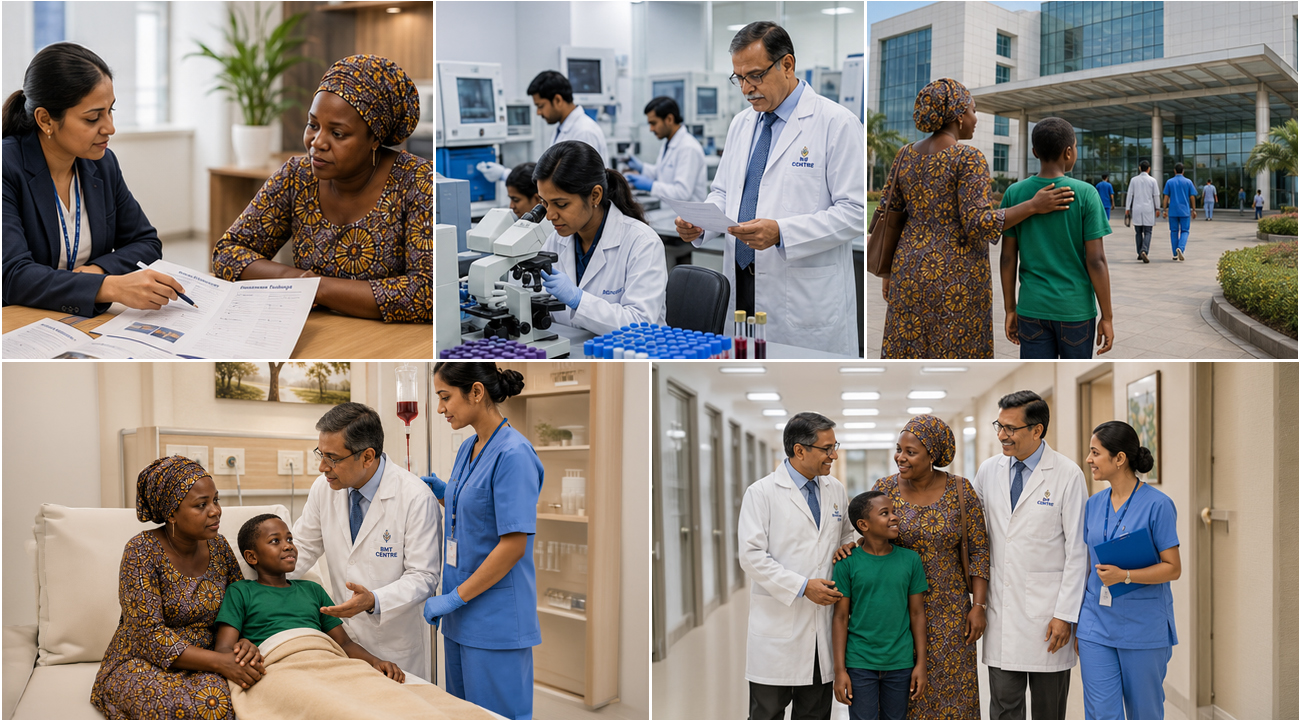
While searching for a sickle cell disease treatment, families look beyond cost. They prioritize experienced doctors, internationally recognized hospitals, transparent communication, and confidence that their loved one will receive high-quality care. Over the years, India has become a preferred destination for many African families because it offers a combination of advanced medical expertise and comprehensive patient support.
Cost Savings
A bone marrow transplant is a complex procedure that often involves weeks of hospitalization, specialized medications, and long-term follow-up care. Compared with many Western countries, treatment in India is generally more affordable. This inspires many families to choose India without struggling with the overwhelming financial burden.
Faster Donor Matching and HLA Testing
Finding a compatible stem cell donor is one of the most important steps in a successful transplant. Leading transplant centers in India have dedicated laboratories for Human Leukocyte Antigen (HLA) typing and established protocols for donor evaluation. Hospitals in India coordinate with national and international donor registries when an unrelated donor is needed.
Internationally Accredited Hospitals
Many of India's leading transplant hospitals hold both JCI (Joint Commission International) and NABH (National Accreditation Board for Hospitals & Healthcare Providers) accreditation. These certifications reflect adherence to internationally recognized standards for patient safety, clinical quality, infection control, and hospital management, giving international families greater confidence in the care they receive.
Experienced Transplant Teams
Bone marrow transplantation requires close collaboration between hematologists, transplant physicians, nurses, infectious disease specialists, critical care experts, and laboratory teams. In India, patients can access multidisciplinary teams to develop extensive experience in managing both routine care and complex cases.
Success Rates
The success rate is one of the reasons patients choose India for stem cell therapy. The success rate of BMT in India generally ranges from 60% to over 90%. It depends on several factors, including the type of transplant, donor compatibility, the patient's age, overall health, and how early treatment begins.
BMT Cost in India Vs Other Countries
The following are estimated price ranges and may vary depending on the patient's condition, transplant type, donor availability, hospital, length of stay, and post-transplant care. A personalized treatment plan and cost estimate can only be provided after a detailed medical evaluation.
| Country | Autologous Bone Marrow Transplant | Allogeneic Bone Marrow Transplant (Matched Donor) |
| India | $12000 – $22,000 | $22,000 – $55,000 |
| UAE | $150,000 – $300,000 | $150,000 – $300,000 |
| Kenya | $14,000 – $31,000 | $35,000 – $90,000 |
| USA | $350,000 – $450,000 | $600,000 – $900,000 |
| Turkey | $45,000 – $70,000 | $70,000 – $120,000 |
| UK | $300,000 – $400,000 | $500,000 – $800,000 |
The cost of a bone marrow transplant in India varies based on the transplant type and donor match. An autologous transplant typically costs between USD 12000 and USD 22,000, while an allogeneic transplant with a matched sibling donor ranges from USD 22,000 to USD 35,000. For haploidentical or matched unrelated donor (MUD) transplants, the estimated cost is USD 30,000 to USD 55,000. Patients requiring an international matched unrelated donor may incur additional expenses for donor registry searches and related procurement costs.
BMT in India with PrymaCare Tourismo
Planning a sickle cell disease treatment in India involves more than selecting a hospital. From finding the right transplant specialist and understanding treatment costs to arranging travel and post-treatment follow-up, every step requires careful coordination. PrymaCare Tourismo, a Government of India-registered medical tourism company, helps African families navigate this journey with confidence by providing complete medical travel support. With a network of 17+ leading hospital chains across India, PrymaCare connects patients with the top hospitals in India, all recognized by JCI and NABH accreditation. Rather than recommending a single hospital to the patient, the team sends multiple treatment plans with estimated costs considering the patient's diagnosis, donor availability, age, medical history, and treatment goals. We have a trusted network of top bone marrow transplant specialists across India, including Dr. Vikas Dua at Fortis Memorial Research Institute (FMRI), Gurgaon, one of India's leading pediatric hematologists and bone marrow transplant specialists.PrymaCare provides detailed doctor profiles and facilitates consultations offline even before the treatment begins.
Every patient is assigned a dedicated care coordinator who provides personalized support throughout the treatment journey, from medical visa assistance, airport transfers, accommodation, interpreter services, and hospital appointments to post-treatment follow-up. By following a patient- first approach throughout the treatment journey, we maintain complete transparency by offering our medical coordination services without charging patients hidden commissions or service fees. PrymaCare’s support continues even after the transplant. Once patients return to their home country, the team helps coordinate follow-up consultations with the treating specialist, facilitates the sharing of medical reports, and assists with ongoing communication between patients and their concerned specialist.
Final Thoughts
A BMT treatment can be a life-saving procedure for patients with sickle cell disease. While the treatment journey may seem overwhelming, choosing the right hospital with experienced transplant specialists can make a significant difference to both clinical outcomes and the overall patient experience. For many African families, navigating a bone marrow transplant in India with the best medical tourism facilitator, PrymaCare Tourismo, has become a convenient solution. With the right medical guidance, timely diagnosis, and comprehensive support, patients can achieve better treatment outcomes and a smoother recovery.
Need Expert Guidance for Bone Marrow Transplant in India?
Talk to our medical coordinators to get a personalised treatment plan.
