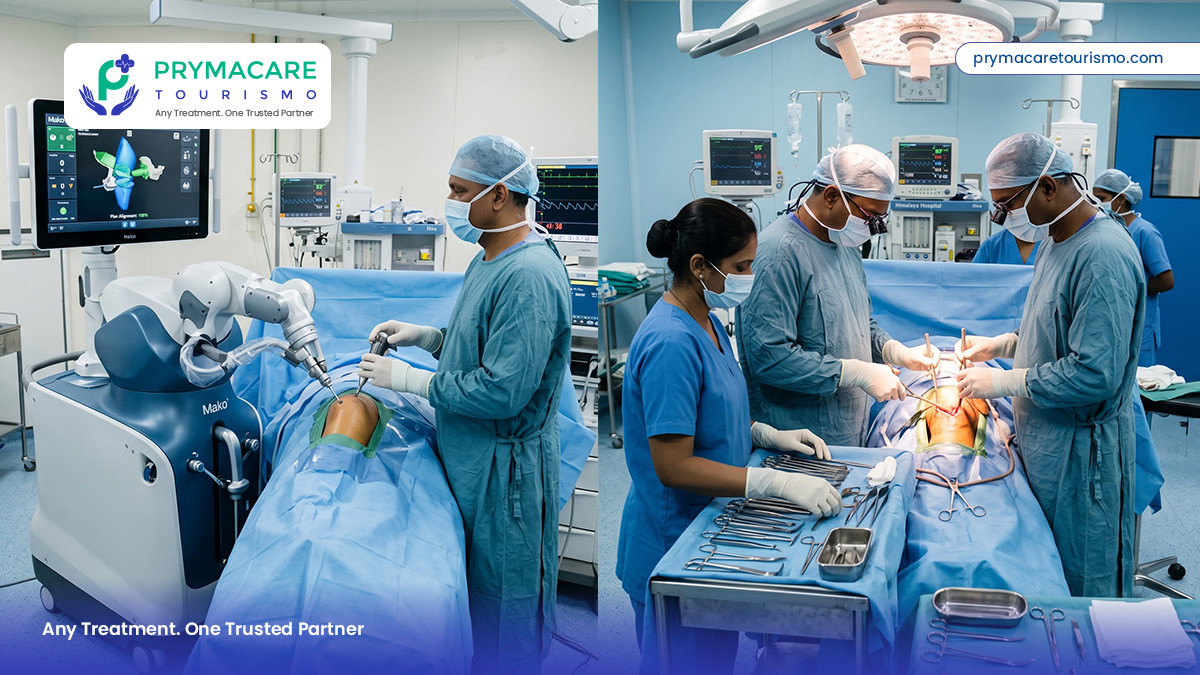
Hearing that you need surgery is stressful on its own. When you’re also traveling from another country for treatment, the decision can feel even more overwhelming. You might come across terms like robotic surgery, minimally invasive surgery, keyhole surgery, and traditional surgery, open surgery - without knowing which option is truly best for your condition. So, how do you choose between robotic surgery vs traditional surgery? The right approach depends on your diagnosis, the type and complexity of surgery, your overall health, the surgeon's experience, and the facilities available at the hospital.
This guide explains the differences in simple terms, including recovery, potential benefits, safety, and availability in India.
What Is Robotic Surgery?
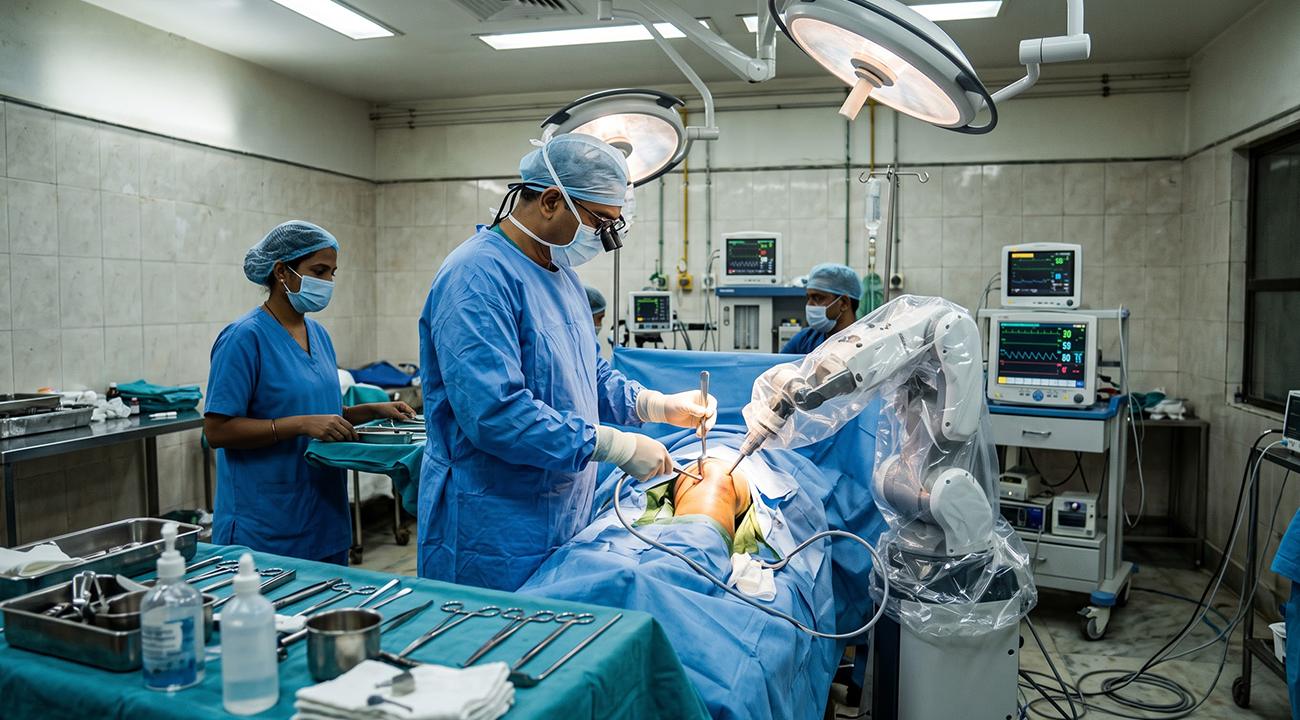
Robotic surgery is a type of minimally invasive surgery where the surgeon uses a robotic-assisted system to perform the operation through small incisions. Instead of standing directly over the patient, the surgeon sits at a console near the operating table and controls precise surgical instruments attached to robotic arms. A high-definition camera delivers a magnified, three-dimensional view of the surgical site, giving the surgeon exceptional visibility. The robotic instruments can make highly controlled, steady movements inside the body, which can improve accuracy and potentially reduce tissue damage compared to some traditional techniques.
It is important to note that the robot does not perform the surgery on its own. The surgeon remains in control throughout the procedure. The robotic system assists the surgeon by providing enhanced visualization, instrument control, and the ability to make precise movements in areas that may be difficult to reach using conventional techniques. The da Vinci surgical system is a leading example of robotic-assisted surgical technology used in hospitals across India.
What Is Traditional or Open Surgery?
Traditional surgery, also called open surgery, involves making an incision that gives the surgeon direct access to the area being treated. The size and location of the incision depend on the specific procedure and the patient’s anatomy. For some operations, open surgery remains the most appropriate approach because the surgeon needs wider access to organs, tissues, blood vessels, or a larger surgical field. In cases involving complex conditions, emergencies, large tumours, organ transplants, or significant scar tissue from previous operations, open surgery may still be the safer or more practical option. The right choice should be based on your individual condition and clinical needs.
Robotic Surgery vs Traditional Surgery: Key Differences
The biggest difference between these two surgical methods is based on the health condition and the treatment recommended.
| Factor | Robotic Surgery | Traditional Open Surgery |
| Incisions | Usually several small incisions | Usually one larger incision |
| Surgical view | Magnified, 3D camera view in many robotic systems | Direct visual access |
| Instrument movement | Robotic instruments controlled by the surgeon | Surgeon uses conventional surgical instruments |
| Pain and discomfort | May be lower in suitable minimally invasive procedures | May be greater because of the larger incision |
| Scarring | Generally smaller scars | Generally more noticeable scarring |
| Blood loss | May be lower in some procedures | Can be higher depending on the operation |
| Recovery | Often shorter for suitable procedures | May take longer depending on the surgery |
| Availability | Requires specialised equipment and trained teams | More widely available |
| Cost | Often higher because of technology and equipment | May be lower |
| Suitability | Depends heavily on the procedure and patient | Suitable for many complex and extensive operations |
Benefits of Robotic Surgery
Patients and surgeons recommend robotic-assisted surgery for several reasons.
- Smaller incisions: Robotic procedures typically use small keyhole incisions, which may lead to smaller scars and a lower risk of wound-related complications.
- Enhanced visualization: The surgeon views the operative area through a magnified, high-definition 3D camera, providing exceptional detail and depth perception.
- Precise instrument control: Robotic instruments enable highly controlled, steady movements - especially useful in tight or hard-to-reach spaces inside the body.
- Potentially less pain and blood loss: Because the approach is minimally invasive, some patients experience reduced postoperative pain and less blood loss compared with certain open surgeries.
- Potentially shorter recovery: Smaller incisions can help some patients heal faster and return to normal activities sooner, depending on the procedure and overall health.
One important thing to note is that robotic surgery does not always guarantee less pain, lower blood loss, or faster recovery, as outcomes vary based on the specific operation, the patient’s condition, and the surgeon’s expertise.
When Doctors Recommend Traditional Surgery
Traditional surgery may be recommended when the operation requires a larger surgical field, the condition is particularly extensive or complex, or there is significant involvement of surrounding organs or tissues. It is also suggested that when a patient has extensive scar tissue from previous operations, the procedure is an emergency, the surgeon believes open access provides better control or safety, and a suitable robotic system or an appropriately experienced robotic surgical team is not available.
Which Surgeries Can Be Done Robotically?
Robotic-assisted surgery is used across several medical specialties, although not every procedure within these specialties is suitable for robotic treatment. Depending on the hospital, surgeon, and patient's condition, robotic techniques may be used for cancer surgery, urology, gynaecology, cardiac surgery, orthopaedic surgery, and gastrointestinal and colorectal surgery. Robotic-assisted technology is also used in selected joint replacement procedures.
Best Hospitals for Robotic Surgery in India
India has several hospitals that offer robotic-assisted surgery across specialties. Some of the robotic surgery hospitals in India are Indraprastha Apollo Hospital, BLK-Max Super Speciality Hospital, Fortis Memorial Research Institute, Apollo Hospitals, Medanta & Artemis hospitals. However, the best hospital for robotic surgery depends on your specific condition, the procedure required, the surgeon's experience, and the robotic technology available. International patients should also check hospital accreditation, treatment costs, and international patient support before making a decision.
Robotic Surgery Cost in India for International Patients
Generally, robotic surgery costs more than conventional surgery types as it demands specialised equipment, technology, operating-room resources, and trained surgical teams. The cost may vary based on the type of surgery, complexity of the condition, hospital selected, surgeon’s expertise, length of hospital stay, diagnostic tests, and medicines and consumables. International patients should also consider the costs related to post-operative care, accommodation, and travel arrangements.
Trusted Medical Tourism Facilitator in India
For international patients, choosing a surgery in India involves more than comparing surgical techniques. You also need to find the right hospital, understand the recommended treatment, compare costs, and arrange your travel and medical documentation. But when PrymaCare Tourismo, a trusted medical tourism company in India, is by your side, patients and their families can have a stress-free treatment. PrymaCare Tourismo has direct contact with JCI- and NABH-accredited hospitals across India's Tier 1 and Tier 2 cities, giving patients access to multiple hospital options based on their medical needs. Once you share your medical reports, scans, and test results, the team helps you identify the most suitable hospitals and specialists for your condition. Your medical records are then shared with top hospitals in India for robotic surgery, which provide treatment plans and quotations on their official letterhead. This allows you to compare multiple treatment options, recommended surgical approaches, hospitals, and estimated costs before deciding where to travel for treatment.
The final choice of surgical approach should always be made by the treating surgeon after reviewing your medical history, reports, and individual circumstances. Our support continues beyond hospital selection. We assist with medical visa arrangements, travel planning, accommodation, and language support, while our experienced medical coordinators remain available 24/7 to guide you throughout your treatment. From your first enquiry to hospital visits and follow-up coordination, you have a dedicated team to help make the process easier and more organised.
Make Your Surgical Decision Confidently
Robotic surgery is an important development in modern surgery, but newer technology does not automatically mean it is the right choice for every patient. It is not only about robotic surgery vs traditional surgery, but it is about finding the surgical approach that is most appropriate for your condition and your overall treatment plan. If you are considering robotic surgery in India, you do not have to navigate the process alone. PrymaCare Tourismo helps international patients connect with suitable JCI- and NABH-accredited hospitals in India, compare treatment plans and quotations, and understand their surgical options before travelling to India. Make an informed decision with the right medical guidance and take the next step towards the care that best suits your individual needs.
Ready to explore your surgical options in India?
Contact PrymaCare Tourismo today and share your medical reports to receive suitable hospital recommendations and treatment quotations.
Frequently Asked Questions
Robotic surgery is used for many procedures and can be safe when appropriately selected and performed by an experienced surgical team. However, every operation carries risks, and suitability depends on the patient's condition and procedure.
It can be. Robotic procedures may involve additional technology, equipment and specialised resources. The actual difference depends on the procedure, hospital and treatment plan.
Age alone does not determine whether robotic surgery is suitable. The decision depends on overall health, the medical condition, anaesthesia risk and the type of surgery required.
Keyhole surgery is a type of minimally invasive surgery performed through small incisions instead of one large opening. Laparoscopic surgery is one of the most common forms of keyhole surgery, where the surgeon uses a camera and specialised instruments to perform the procedure. Robotic surgery also uses small incisions but involves surgeon-controlled robotic instruments for greater precision and visualisation.
