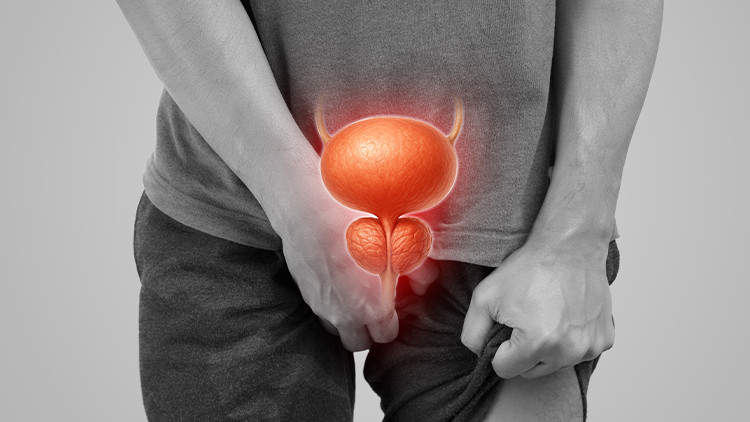
Prostate cancer is the world’s second most common form of cancer among men. Estimates show that nearly 1 in 8 men will be diagnosed with prostate cancer in their lifetime. While early-stage prostate cancer rarely presents any symptoms, its progression may show noticeable changes such as:
- Weak urine flow
- Blood in semen or pee
- Loss of bowel control
- Painful ejaculation
- Pain in the lower back, hip or chest
The most common type of prostate cancer is adenocarcinoma, and the less common types include small cell carcinomas, transitional cell carcinomas, neuroendocrine tumours and sarcomas.
Causes of prostate cancer
Although experts are not sure what causes cells in the prostate to become cancerous, prostate cancer is caused by the unusual speed at which cells divide. Unlike normal cells that eventually die, cancer cells do not. Instead, they multiply and grow into a tumour, which then breaks off and the cancer metastasises to other parts of the body.
Generally, prostate cancer cells grow at a slower rate than other cancers, making the tumour easy to diagnose before it spreads to other parts of the body. At this stage, prostate cancer is highly treatable.
Risk factors
The most common factors leading to prostate cancer include:
- Age: The risk of getting prostate cancer increases with age. A person above the age of 50 is more likely to be diagnosed with prostate cancer.
- Race and ethnicity: People with African ancestry are at a higher risk of contracting prostate cancer.
- Family history: A person is twice as likely to contract prostate cancer if a close family member too has had it.
- Genetics: The incidence of prostate cancer is higher among people who have Lynch syndrome, or inherited mutated genes associated with increased breast cancer risk (BRCA1 and BRCA2).
Grades and stages of prostate cancer
Healthcare providers use the Gleason score and cancer staging to determine the seriousness of cancer and its relevant treatment.
Gleason score: This score enables healthcare providers and professionals to rate the abnormality of cancer cells. The more abnormal the cells are, the higher the Gleason score. The score also helps determine the cancer grade and its potential to be aggressive.
Staging prostate cancer: Cancer staging allows a healthcare provider to determine how advanced the cancer is, or how much it has spread. Normally, prostate cancer spreads to the bones and lymph nodes, and it can also develop in the liver, brain and other organs.
Treatment of prostate cancer:
Surgery
A radical prostatectomy involves the removal of the diseased prostate gland. Though the prostatectomy can eliminate cancer cells that have not yet spread, your healthcare provider can recommend the best way to remove the cancer cells.
Radiation therapy
It is possible to receive radiation therapy as a standalone treatment for prostate cancer or as a combination of other treatments. Radiation can also provide relief from symptoms of prostate cancer. In this regard, there are two types of radiation therapy a healthcare provider can recommend:
- Brachytherapy involves placing radioactive seeds inside the prostate to kill cancer cells while preserving the surrounding healthy tissues.
- External beam radiation therapy, or EBRT, is a machine that delivers X-rays to the tumour level. Advanced types of EBRT, such as IMRT, can target the cancer cells while preserving healthy tissues.
Systemic therapies
If the cancer cells spread outside the colon, your oncologist may recommend systemic treatments that travel throughout the body to destroy or stop the growth of cancer cells. There are two types of major systemic treatments:
- Hormone therapy helps block or lower testosterone that helps prostate cancer to grow. In some cases, patients may have their testicles removed to stop the production of testosterone.
- Chemotherapy utilises drugs to kill cancer cells in the body. Although it can be used independently, patients may receive chemotherapy alongside hormone therapy to stop the spread of cancer cells beyond the prostate gland.
- Targeted therapy focuses on the genetic mutations that cause cancer. They work best for tumours with BRCA mutations.
Focused therapy is a new form of treatment that destroys the tumour inside the prostate gland. Focused therapies may be recommended if the cancer is low risk and has not yet spread beyond the prostate gland.
- High-intensity focused ultrasound (HIFU): High-intensity sound waves help in generating heat to kill cancer cells within the prostate gland.
- Cryotherapy utilises cold gases to freeze and stop the spread of cancer cells from within the prostate gland.
- Laser ablation focuses on using intense heat directed at the tumour to kill cancer cells within the prostate gland and destroy the tumour.
Conclusion
India's advancements in oncology have positioned it as a leading destination for cancer treatment. The country's expertise in robotic-assisted surgery, high-precision radiation therapy, stem cell transplantation, targeted therapy, immunotherapy, and paediatric oncology treatments indicates on its commitment to fighting cancer and providing patients with the best possible care. With a strong focus on multidisciplinary approaches, advanced technology, and personalized treatment plans, India continues to offer hope to cancer patients seeking specialized and challenging procedures in their fight against this devastating disease.