
Choosing between dialysis and a kidney transplant is a significant decision for people living with advanced kidney disease. However, access to treatment, specialist care, transplant programmes and affordability can vary considerably between countries. Understanding the differences between dialysis vs kidney transplant can help patients and families make informed decisions about long-term kidney failure treatment. India has become a treatment destination for many international patients because of its network of specialist hospitals, transplant programmes and comparatively lower treatment costs. This guide explains how both options work, compares their long-term implications, and examines the medical, financial and legal considerations for foreign patients considering a kidney transplant in India.
Major Reasons Behind Kidney Failure
End-stage kidney disease (ESKD), also called kidney failure, occurs when the kidneys lose most of their ability to filter waste, remove excess fluid and maintain the body's chemical balance. Kidney failure can develop due to several underlying health conditions that gradually damage kidney function. Common causes include diabetes, high blood pressure, chronic glomerulonephritis, polycystic kidney disease, repeated kidney infections and urinary tract obstructions. Other contributing factors include autoimmune diseases such as lupus, which can cause kidney inflammation, and prolonged use of certain medications that may damage the kidneys. Severe dehydration and acute kidney injuries can also contribute to kidney damage. Identifying the underlying cause helps doctors determine the appropriate treatment and prevent further complications wherever possible.
Kidney Failure Treatment in India
Treatment for kidney failure in India depends on the patient's kidney function, overall health, age and medical condition. For patients with advanced kidney disease, treatment generally involves kidney replacement therapy through dialysis or kidney transplantation. Some patients may also receive conservative kidney management based on their health needs and treatment preferences.
The two main dialysis options available in India are:
- Haemodialysis: Blood is passed through a filtering machine to remove waste products and excess fluid. It is commonly performed three times a week, although the frequency depends on individual medical requirements.
- Peritoneal dialysis: The lining of the abdomen acts as a natural filter to remove waste and excess fluid. Dialysis fluid is introduced into the abdominal cavity and later drained. After proper training, patients can perform this treatment at home.
Kidney transplantation is another treatment option for eligible patients. It involves placing a healthy kidney from a living or deceased donor into the recipient's body. India offers both dialysis and kidney transplantation through specialised nephrology and urology departments. Patients travelling to India can access treatment options across major cities, with hospitals offering different approaches based on medical suitability, specialist recommendations, donor availability, and legal eligibility.
Dialysis vs Kidney Transplant: A Comparison
Dialysis and kidney transplantation both help manage advanced kidney failure, but they work differently. Dialysis performs some of the kidney's filtering functions through an external process, while a transplant introduces a functioning donor kidney.
| Comparison factor | Dialysis | Kidney Transplant |
| Treatment frequency | Regular sessions or daily exchanges, depending on the method | One major surgical procedure, followed by lifelong monitoring |
| Daily life | Requires ongoing treatment schedules | Often allows greater flexibility after recovery |
| Diet and fluids | Restrictions may be necessary | Dietary guidance continues, but restrictions may change |
| Travel freedom | Requires planning around dialysis sessions | Usually more flexibility after medical clearance |
| Medication | Medicines to manage kidney disease and related complications | Lifelong immunosuppressant medication |
| Main risks | Infection, cardiovascular complications, low blood pressure and vascular access problems | Surgical complications, rejection, infection and medication-related effects |
| Donor required | No | Yes |
| Long-term cost pattern | Recurring treatment and associated expenses | Higher initial cost, followed by ongoing medication and monitoring costs |
Dialysis helps manage kidney failure but requires regular treatment sessions that can affect work, travel, and daily responsibilities. Peritoneal dialysis offers greater flexibility but involves daily care and infection prevention.
A successful kidney transplant can reduce dependence on scheduled dialysis, allowing many patients to return to work, travel, and everyday activities after recovery. However, recipients need lifelong medication, regular follow-ups, and ongoing health monitoring.
In terms of life expectancy, kidney transplantation is associated with better long-term survival than maintenance dialysis for many medically suitable patients. However, outcomes vary depending on age, overall health, underlying conditions, donor factors, and adherence to post-transplant care.
Risk Factors Behind Kidney Transplant and Dialysis
Both dialysis and kidney transplantation may involve certain risks, depending on the patient's health, treatment type and medical history. Dialysis may be associated with infections, low blood pressure during haemodialysis, cardiovascular complications, anaemia or peritoneal infections. Kidney transplantation may involve surgical complications, infections, rejection of the transplanted kidney or side effects from long-term immunosuppressant medicines. However, these complications are not inevitable. Experienced nephrologists and transplant specialists in India assess individual risk factors and take appropriate measures to minimise complications through careful treatment planning, monitoring and follow-up care.
Why Patients Travel to India for a Kidney Transplant
India offers international patients access to specialist kidney transplant services, experienced medical teams and treatment options at comparatively affordable costs. For eligible patients, seeking treatment in India may provide an alternative when local healthcare systems face limitations in dialysis access, transplant services or specialist care.
Access to Specialist Kidney Care
India has established nephrology and kidney transplant programmes across major cities. Patients can access specialist evaluation, living-donor transplantation and postoperative care, depending on medical suitability and legal eligibility.
Experienced Transplant Teams and Accredited Hospitals
Kidney transplant hospitals in India have multidisciplinary transplant teams, including nephrologists, transplant surgeons and critical care specialists. Patients can consider hospitals with JCI and NABH accreditation while evaluating transplant experience, infection control and long-term follow-up services.
Affordable Treatment Options
Kidney transplantation in India can be more affordable than in many Western countries. However, the total cost depends on the hospital, medical requirements, donor evaluation, medicines and length of stay. International patients should also account for travel, accommodation and follow-up care expenses.
Rules for Foreign Patients: Donor, Embassy and Authorisation Committee
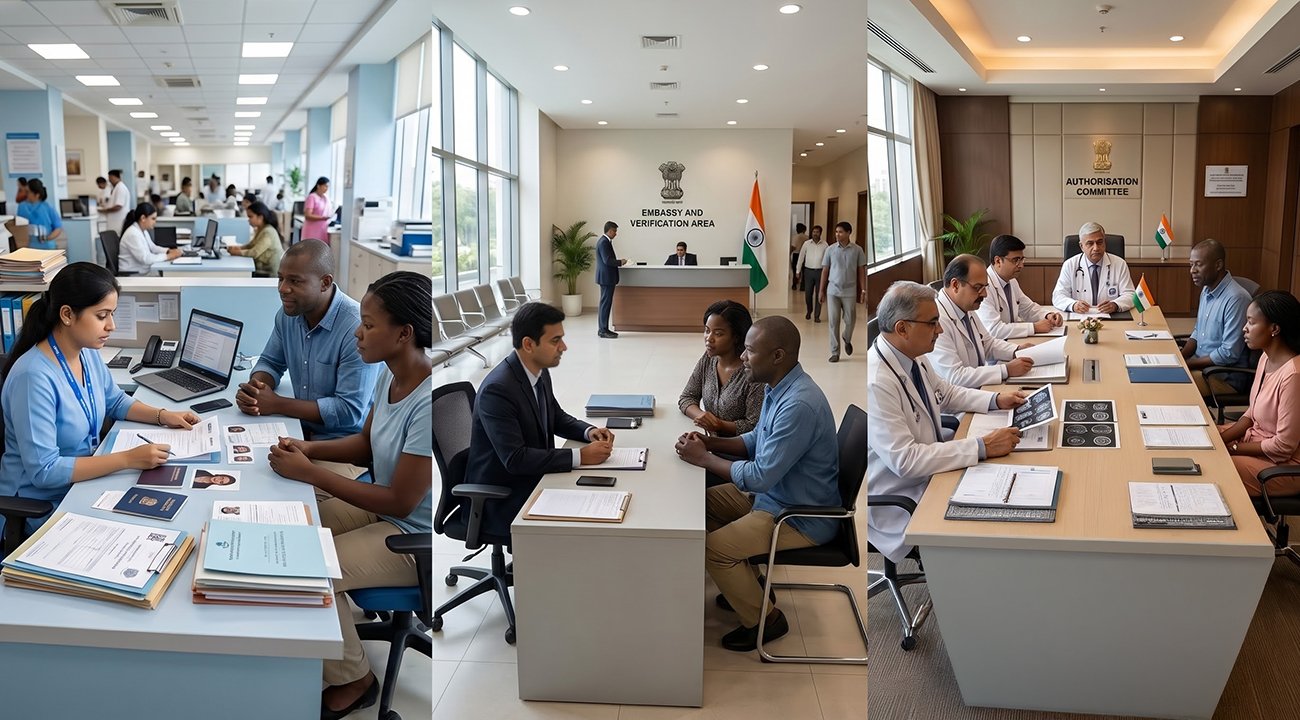
Foreign patients planning a kidney transplant in India must comply with the Transplantation of Human Organs and Tissues Act, (THOTA), and applicable regulations. These rules apply to living kidney and liver donation alike. They are in place to confirm that the donor is a genuine close family member of the patient and that the donation is voluntary and free of any commercial arrangement.
Donor Eligibility and Legal Requirements
Living kidney donation is permitted only under legally recognised circumstances. Near-relative donors may include spouses, parents, children, siblings, grandparents and grandchildren, subject to verification. Donations from non-relatives require additional scrutiny and approval. Commercial organ donation is prohibited. When an Indian national proposes to donate a kidney to a foreign recipient, the relationship and applicable legal requirements must be established. In practice, this means a living donor in India generally has to be an immediate family member of the patient, and that relationship must be proved with documents rather than simply stated. A marriage certificate alone is usually not enough: hospitals also ask for supporting evidence, such as marriage photographs and the children's records, to establish the relationship beyond doubt. The same approach applies to living liver donation.
Documents and Approvals
Foreign-national transplant cases generally require passports, medical reports, proof of the donor-recipient relationship and other prescribed documents. Embassy or High Commission verification may also be required. The relevant Authorisation Committee reviews the case to verify legal eligibility and the circumstances of donation. Approval is not guaranteed.
Hospitals that treat international transplant patients, such as Amrita Hospital, Faridabad, provide a detailed checklist of documents that the donor and the recipient must carry. Requirements vary by hospital and by the donor's relationship to the patient (for example, a spouse, parent, child, sibling or other close relative), but a typical checklist includes the following, for both the donor and the recipient unless stated otherwise:
- Identity proofs: passport, visa, national ID or another relevant ID proof from the country of origin. Hospitals usually ask for all three, and the name, date of birth and address must match across every document, as even small discrepancies can cause delays.
- Affidavit or No Objection Certificate (NOC): from the donor and one near relative (father, mother or sibling), and likewise from the recipient and one near relative.
- Police verification certificate.
- Relationship proofs: documents that establish the family relationship between the donor and the recipient. For spouses, this includes the marriage certificate and marriage photographs, along with the birth, educational or death certificates (where applicable) and ID proofs of their children. For parents, children, siblings or other close relatives, this usually means birth certificates and other civil records that link the two, along with a family ID where available, supported by family photographs and any further evidence the hospital requests.
- Bank statements covering the last three years.
- Old photographs (usually 8 to 10) showing the donor and recipient together.
- Form 21 and an NOC from the embassy of the country of origin in India.
- Passport-size photographs (usually 15 each).
All documents must be in English. Translated documents should be signed by a notary in the donor's and recipient's country of origin, and copies of all other documents should be attested by the embassy.
Patients and donors should also be prepared for in-person requirements. A DNA test may be required to confirm the relationship (for a spouse donor, a child of the couple needs to be present at the hospital for this), and one close relative of the donor (and of the recipient, where applicable) needs to attend the external committee review. The committee may also ask for additional documents, which must be submitted promptly.
How Long Does the Process Take?
The timeline depends on medical evaluation, donor compatibility, document verification and approval procedures. Patients should complete the required medical and legal assessments before finalising travel or surgery plans. Collecting, translating, notarising and attesting the documents can take considerable time, so it is advisable to start early and to plan for the DNA test and the relatives' attendance at the committee when arranging travel. Consult the hospital's transplant department and relevant authorities for current requirements and expected timelines.
Dialysis Costs in India Compared with Transplant Costs
Dialysis involves recurring expenses over months and years. These may include treatment sessions, medicines, investigations, transport and dietary management. A kidney transplant generally involves a higher initial treatment expense. However, it replaces the need for routine dialysis when the transplant functions successfully. Patients also need to plan for lifelong medicines to prevent organ rejection, regular blood tests, and doctor visits. The financial decision should therefore consider the patient's expected treatment duration and medical suitability, rather than comparing only the initial surgery cost with one dialysis session. The cost of a kidney transplant in India is approximately US$11,500, covering both donor and recipient expenses, while a single dialysis session typically costs between US$30 and US$70.
How to Choose Between Dialysis and Kidney Transplant?
Deciding between dialysis and a kidney transplant depends on the patient's kidney function, overall health, and long-term treatment needs. Doctors consider several factors, including the stage of kidney disease, age, existing medical conditions such as diabetes or heart disease, and the risks associated with each treatment. For transplantation, donor availability, blood group compatibility and tissue matching are also important considerations. Patients should evaluate the long-term financial commitments, lifestyle changes, treatment schedules and ongoing medication requirements associated with both options. A nephrologist and transplant surgeon assess these factors to recommend the most suitable approach based on the patient's medical condition. Ultimately, the decision between dialysis vs kidney transplant requires individual medical evaluation rather than a general comparison of the two treatments.
How PrymaCare Coordinates Dialysis and Kidney Transplant Treatment in India
As a Government of India-registered medical tourism company, PrymaCare Tourismo helps international patients find suitable hospitals for dialysis and kidney transplantation in India. . Patients can receive multiple treatment quotations from different hospitals, each issued on the respective hospital's official letterhead, making it easier to review proposed treatment plans and expenses. Our zero-commission model allows patients to pay hospitals directly without additional commissions on their treatment costs. Beyond hospital coordination, we assist with sharing medical reports, arranging consultations, and coordinating follow-up care. We also support patients and their attendants with accommodation, food arrangements, airport pickups, local transport and language translation in English, French and Arabic. From the initial hospital enquiry to treatment coordination and post-treatment follow-up arrangements, PrymaCare Tourismo helps international patients manage the practical aspects of their medical journey in India while comparing suitable care options based on their needs.
Final Thoughts
The dialysis vs kidney transplant decision depends on medical suitability, long-term health considerations, donor availability and financial circumstances. While transplantation may offer better long-term outcomes for many eligible patients, dialysis remains an essential treatment option for those awaiting transplantation or unable to undergo surgery. For international patients, India offers access to specialist kidney care, transplant programmes and comparatively affordable treatment options. However, understanding donor regulations, hospital capabilities, treatment costs and post-transplant follow-up is essential before making a decision. PrymaCare Tourismo helps international patients compare suitable hospital options by sending multiple treatment quotations and coordinating the end-to-end treatment journey in India.
Talk to our medical coordinator to discuss your treatment requirements and get assistance in comparing kidney care options in India.